Pick
PickNVIDIA RTX Spark: a personal AI supercomputer chip
NVIDIA says RTX Spark combines gaming, creative and local AI workloads in one superchip with up to 128GB unified memory and 1 petaflop of AI compute.
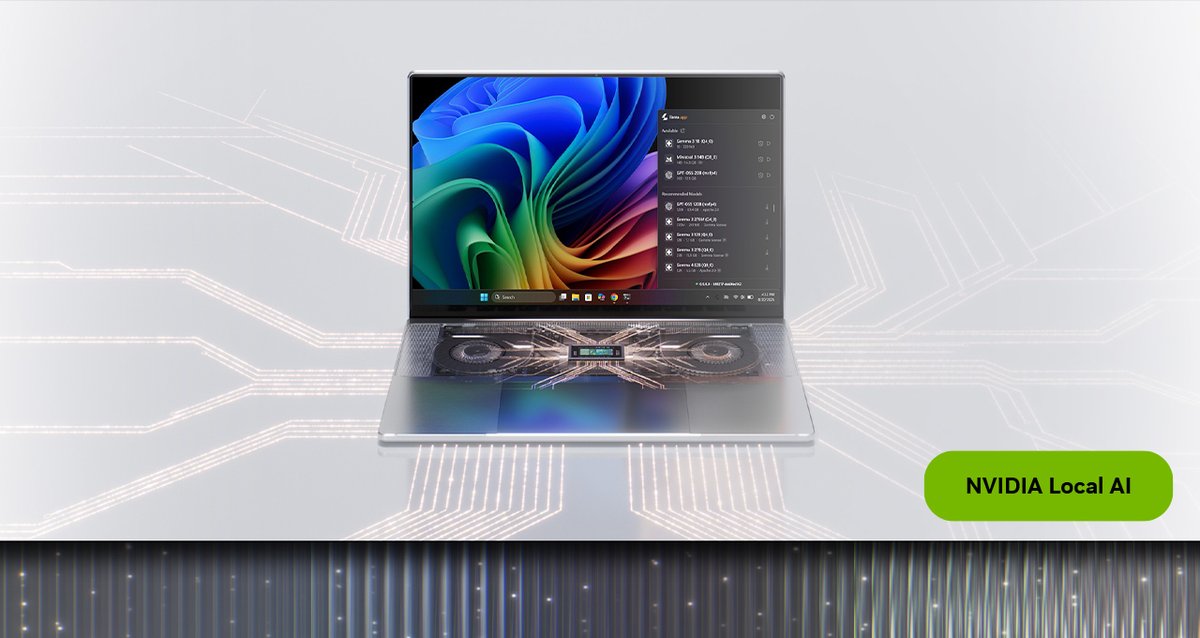
NVIDIA is pitching RTX Spark as a new kind of PC: a single superchip that combines a gaming machine, a creative workstation and a personal AI supercomputer. RTX Spark laptops go on sale on October 16, and NVIDIA is rolling out software updates focused on running AI agents locally.
The hardware
RTX Spark offers up to 128 GB of unified memory and up to one petaflop of AI compute, along with NVIDIA's full RTX and CUDA software stack. Unified memory is the key spec for local AI: it determines how large a model you can load without offloading to slower storage.
The software push
NVIDIA says interest in local agents has surged this year, with open-source agent projects such as OpenClaw and Hermes climbing GitHub popularity charts, and local model downloads running five times higher than all of last year. It credits recent local models with becoming capable enough to power agents.
To make setup easier, RTX Spark machines will show a "Getting Started" screen at first boot where users can pick and install an agent app. Several apps, including GitHub Copilot, Hermes Agent, OpenClaw, Perplexity, Pi and WorkBuddy, will recommend an optimized local model and settings and configure them in a few clicks.
Security is part of the pitch. NVIDIA is introducing sandboxing through OpenShell and MXC: MXC provides operating-system-level isolation, while OpenShell adds features like credential protection and security monitoring for agents. NVIDIA says OpenClaw and GitHub Copilot already support MXC, and Hermes Agent will add it by the end of the month.
Why it matters for builders
Local agents are moving from enthusiast setups to a default experience on new laptops. If you build agent tools, supporting local models, through runtimes like Ollama or vendor-specific integrations, is becoming a competitive feature, especially for privacy-sensitive users.
Sandboxing deserves equal attention. An agent that can run code and use your credentials needs strict boundaries. Building on OS-level isolation and protecting secrets by default will matter as more agents run on personal machines.
Local runtimes and open models are listed in our APIs & Model Platforms and New AI Models categories.
Source: NVIDIA. This article is PickAI’s own summary and analysis based on the original reporting.